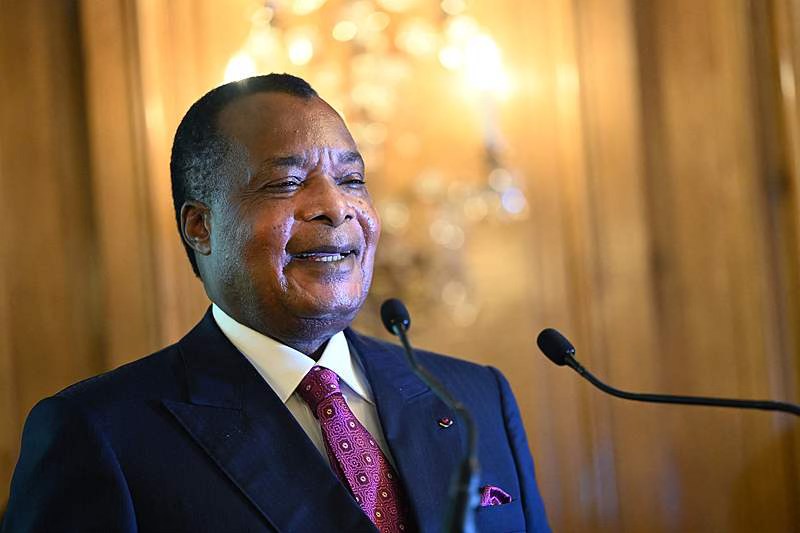

The Constitutional Court of the Republic of Congo has upheld President Denis Sassou Nguesso’s re-election, confirming his victory in the March 15, 2026, presidential election with 94.9 percent of the vote.
The announcement was made on Saturday by the court’s president, Auguste Iloki, following a hearing in Brazzaville. The figure slightly exceeds the 94.82 percent previously declared by Interior Minister Raymond Zephirin Mboulou on March 17.
The court dismissed an appeal by opposition candidates, including Uphrem Dave Mafoula, who had challenged the election results citing alleged irregularities. Mafoula, who finished third with 1.03 percent of the vote, sought annulment of the outcome, but the court’s ruling confirmed the incumbent’s victory.
Under Congolese law, candidates, parties, and voters may file complaints over major electoral irregularities. The court’s decision aligns with the African Union’s assessment, which described the vote as free, fair, and credible.
Observers noted that the fragmented opposition played a key role in Nguesso’s decisive win. Seven candidates contested the election, but none mounted a significant challenge against the longtime leader.
During the campaign, Nguesso highlighted achievements in governance, development, and anti-corruption, while pledging national stability. He emphasized that the fight against corruption would shift from prevention to punishment.
The president also reaffirmed Congo’s foreign policy, signaling continued ties with countries pursuing stable diplomacy, specifically mentioning the Russian Federation. Russian President Vladimir Putin and Rwandan President Paul Kagame congratulated Nguesso on his victory, reflecting long-standing diplomatic relations.
As he begins what he describes as his final constitutional term, attention has turned to succession planning, institutional stability, and economic reforms, including expanding electricity capacity to 1,500 megawatts by 2030.
Government data show electricity access has increased from 49 percent in 2021 to 59 percent in 2025, with 75 percent coverage in urban areas. Youth unemployment remains around 19 percent, contributing to an overall rate of 40 percent.
Congo continues to invest in infrastructure, including 30 kilometres of road projects between Pointe-Noire and Brazzaville, and maintains its position as one of sub-Saharan Africa’s largest oil producers. Nguesso, who first came to power in 1979 and returned in 1997, now enters a new phase of leadership with a focus on continuity and reform.