The discovery of a second alleged unauthorised government agency operating within Nigeria’s federal government structure has triggered renewed concerns over oversight, accountability and institutional controls in the public service.
The latest case involves the National Brands Development and Made-in-Nigeria Special Project Office, which the Independent Corrupt Practices and Other Related Offences Commission (ICPC) says was operating without legal authorisation from a government building in Abuja.
ICPC Chairman, Dr Musa Adamu Aliyu, said the organisation was allegedly promoted by George Buchi Nwabueze, who reportedly used different variations of his name. Following the commission’s briefing, President Bola Tinubu ordered Nwabueze’s arrest and suspended three permanent secretaries in the Office of the Secretary to the Government of the Federation (OSGF).
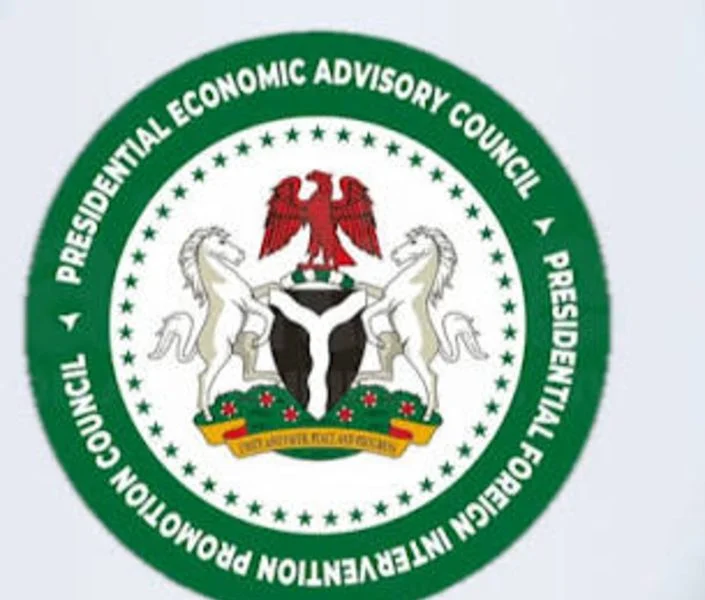
The discovery emerged during an ICPC investigation into the disputed Presidential Foreign Intervention Promotion Council (PFIPC), another organisation the Presidency had earlier disowned after it reportedly operated from the Federal Secretariat for about two years.
The emergence of two alleged fake agencies has raised questions about how organisations with questionable legal status were able to operate within or around official government institutions.
Governance expert Dr Joe Abah described the development as evidence of deeper institutional weaknesses, saying some organisations exploit official-looking names, logos and addresses to appear legitimate and raise funds.
Professor Murtala Muhammad, Vice-President of the Nigerian Political Science Association, said the controversy reflected broader governance failures rather than isolated acts of criminality. He argued that weak verification systems, poor inter-agency coordination and inadequate accountability created opportunities for such organisations to thrive.
Muhammad also expressed concern over reports that the PFIPC allegedly sought a ₦1.3 billion budget allocation, saying the case suggested vulnerabilities within the government’s fiscal and administrative systems. He called for stronger verification procedures, improved information sharing and tighter budgetary oversight.
The Executive Director of the Centre for Information Technology and Development, Y. Z. Ya’u, said the incidents highlighted long-standing governance problems, while former Minister of Youth and Sports Solomon Dalung urged authorities to investigate reports that the organisation had coordinators in several states and representatives abroad.
Meanwhile, Nwabueze has rejected the ICPC’s description of the Made-in-Nigeria Special Project Office as a fake agency. Through his management, he maintained that the initiative is an approved public-private project anchored on Executive Orders 003 of 2017 and 005 of 2018, insisting it has never claimed to be a statutory government agency.