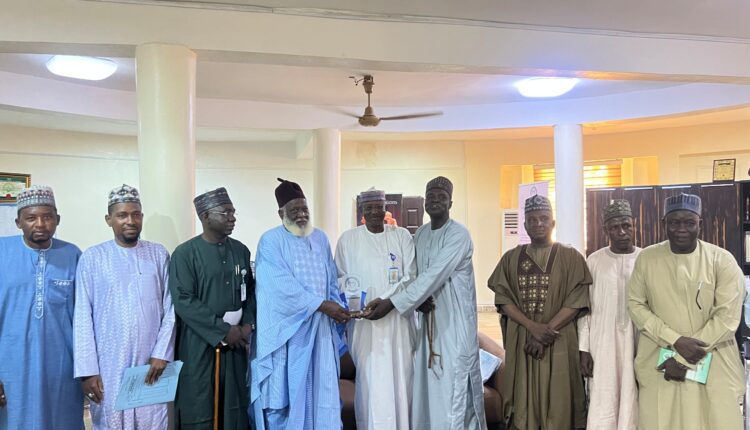
The Chairman of the Council on Qur’anic Education from Borno State, Sheikh Tijjani Umar, has led a delegation to Khalifa Isyaku Rabiu University (KHAIRUN), Kano, to strengthen ties and explore opportunities for collaboration in Qur’anic education.
The visit also sought to build on the longstanding relationship associated with the late founder of KHAIRUN, Sheikh Khalifa Isyaku Rabiu, particularly in Qur’anic learning, moral development and Islamic education.
In a statement by Jibril Ado Dandawaki, Acting Director of Public Relations, Media and Internal Affairs, the university said the delegation emphasised the need to recognise the Tsangaya system for its historical contributions to Qur’anic learning, Islamic scholarship and moral development.
The delegation also called for efforts to address what it described as misconceptions and negative narratives about Tsangaya education, arguing that such perceptions fail to reflect its historical role in education and society.
Receiving the delegation, KHAIRUN Vice-Chancellor, Prof. Abdulrashid Garba, expressed appreciation for the visit and commended the council for its efforts to promote and preserve Qur’anic education.
Garba briefed the delegation on programmes incorporated into the university’s academic and character-development framework, including Qur’anic Recitation, Morality, Entrepreneurship, and Arabic and French language studies.
He said the programmes were designed to complement academic training with moral, personal and intellectual development, in line with the late founder’s vision of producing graduates who are academically competent, morally upright and of good character.
The vice-chancellor reaffirmed KHAIRUN’s commitment to promoting Qur’anic learning, moral discipline and responsible citizenship as core elements of its educational philosophy.
Both sides expressed their commitment to sustaining the relationship and exploring areas of collaboration in Qur’anic education, moral development, knowledge advancement and the preservation of Tsangaya values.