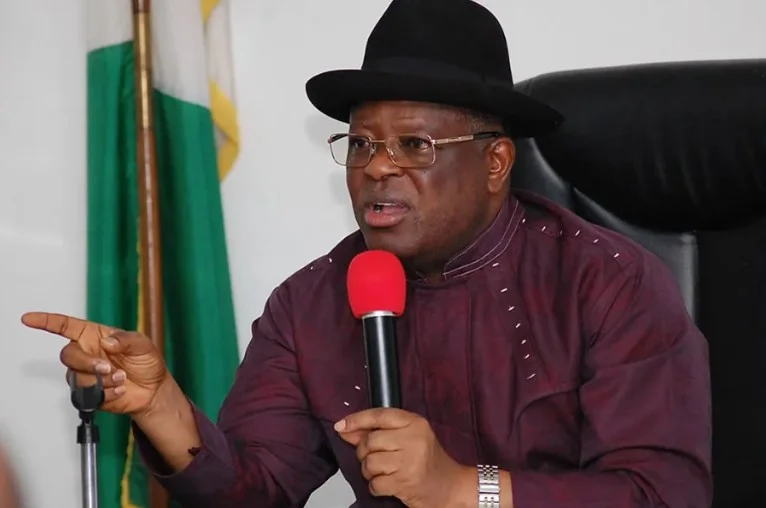
Minister of Works David Umahi has said Peter Obi is not the South-East’s best option for the presidency, defending political leaders from the region who support President Bola Tinubu ahead of the 2027 general election.
Umahi made the remarks during an interview with ARISE News on Friday, arguing that Obi failed to consult key political stakeholders in the South-East before contesting the 2023 presidential election.
“Peter Obi is not the best of our finest in South East. He’s not the best, he can never be the best,” Umahi said.
The former Ebonyi State governor maintained that any aspirant seeking to represent the region at the national level should consult governors and other influential political leaders before pursuing such an ambition.
“You cannot play politics in South East without consulting people like us,” he said, adding that he would have consulted regional leaders had he sought the presidency.
Umahi also argued that the South-East had several qualified politicians who could aspire to the presidency, rejecting the notion that Obi should automatically be regarded as the region’s strongest candidate because of his performance in the 2023 election.
On the question of which state should produce a future South-East presidential candidate, the minister said the opportunity should not automatically be reserved for Anambra State, the home state of Nigeria’s first president, Nnamdi Azikiwe.
He identified Ebonyi, Enugu, Abia and Imo as other states that should be considered in discussions about the region’s presidential prospects.
Umahi further defended South-East politicians supporting Tinubu, arguing that their political choices should not be interpreted as a betrayal of the region. He said building alliances with other parts of the country was essential to securing the presidency.
In September, Umahi also dismissed comparisons between himself and Obi, saying he could not identify any area in which the former Anambra governor was superior to him. He added that the South-East would eventually produce a Nigerian president but maintained that “it is not yet our turn.”