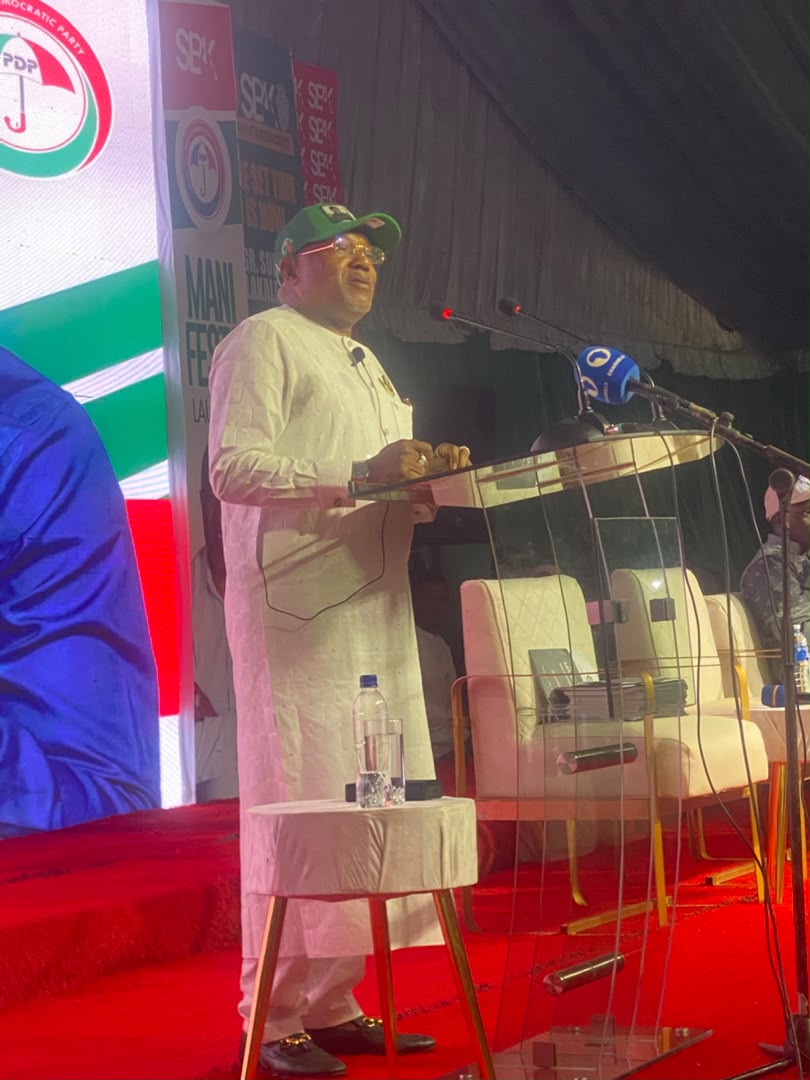
The House of Representatives has resolved to investigate reported cases of political violence, attacks on political gatherings and disruptions of political activities across the country ahead of the 2027 general elections.
The resolution followed the adoption of a motion of urgent public importance sponsored by the House Minority Leader, Fred Agbedi, and 16 other lawmakers during plenary on Thursday.
Leading the debate, Agbedi condemned incidents of violence, intimidation, assault and destruction of property during political rallies, meetings and processions, regardless of the parties or individuals involved.
He warned that the growing incidents could threaten the peaceful conduct of the 2027 elections and undermine public confidence in the democratic process if left unchecked.
Agbedi cited Section 40 of the 1999 Constitution, as amended, which guarantees citizens the right to freedom of assembly and association, including the right to form or belong to political parties. He argued that Nigerians must be able to participate in political activities without fear of attacks or intimidation.
The Minority Leader also urged political parties, candidates and their supporters to avoid inflammatory statements, reject violence and cooperate with security agencies to maintain public order.
To illustrate his concerns, Agbedi cited several reported incidents, including the disruption of political meetings in Enugu State on September 12, 2026, which reportedly left two people injured and one dead.
He also recalled an attack on APC supporters travelling to a rally in Katsina State on October 28, during which 14 suspects were reportedly arrested. Other incidents included an attack on an APC rally in Lafia, Nasarawa State, on November 4, and violence during a political procession in Asaba, Delta State, on November 7, which reportedly claimed one life and left five people injured.
Agbedi called for an impartial and thorough investigation, cautioning against prematurely identifying those responsible for the attacks. He urged the House to exercise its investigative powers under Section 88 of the Constitution to examine the incidents and assess the response of relevant public authorities.
Following the adoption of the motion, the House constituted an ad hoc committee chaired by its Leader, Professor Julius Ihonvbere, to investigate the immediate and underlying causes of politically motivated violence across the country.
The committee, which includes the Minority Leader and members of the relevant security committees, has three weeks to investigate the incidents and submit its findings to the House.