By BASHIR ADEFAKA
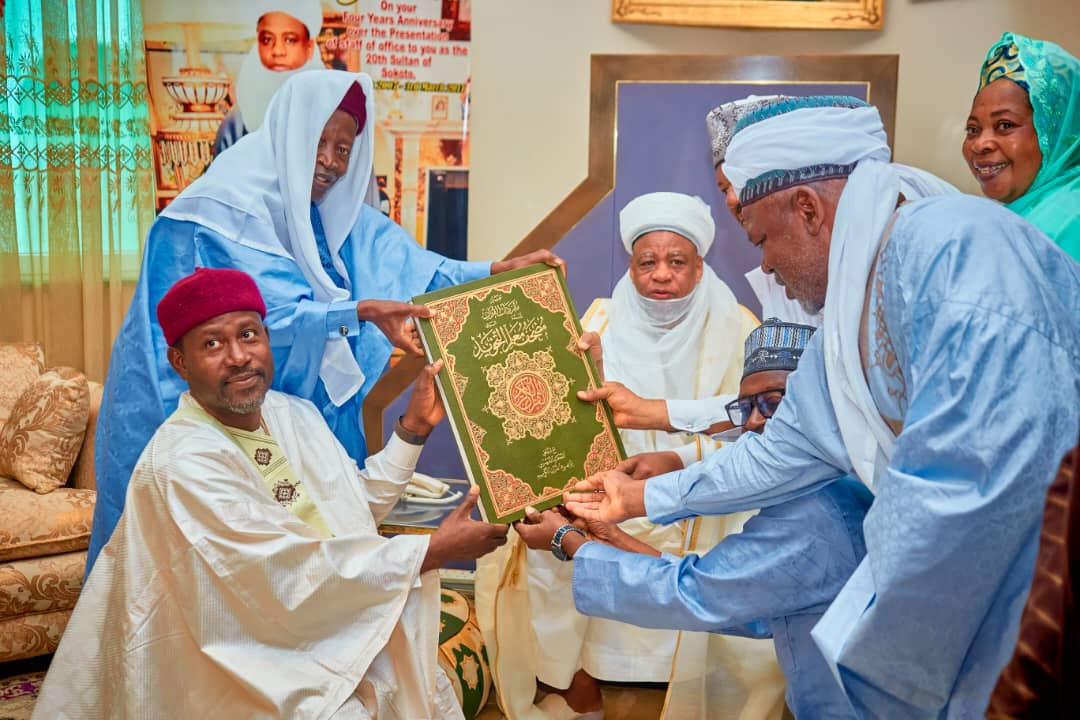
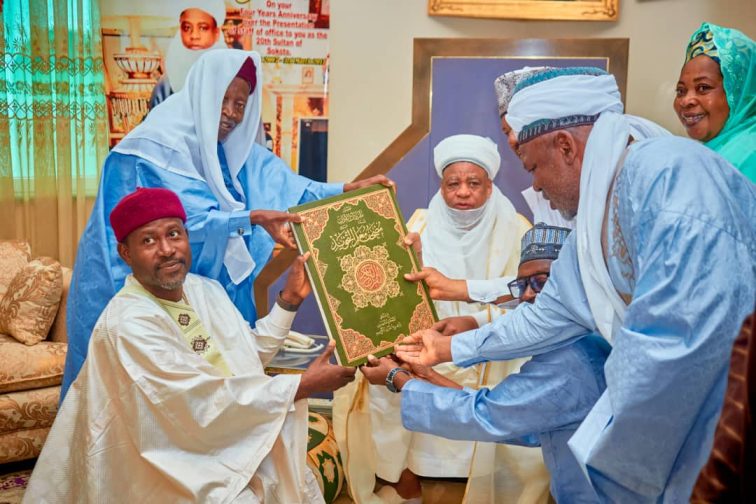
The recent visit of the Khalifatul Al-Adabiyyah, Ash-Sheikh Al-Mustapha Kamalud-deen Al-Adabi, to His Eminence, the Sultan of Sokoto, Alhaji Muhammad Sa’ad Abubakar, CFR, mni, offers important lessons that go beyond the traditional courtesy associated with visits between prominent Muslim personalities.
The proprietor of Muhammad Kamalud-deen University, Ilorin, Nigeria was accompanied on the visit by Grand Khadi of Kwara State Shari’ah Court of Appeal, Honourable Justice Abdullateef Kamalud-deen, Deputy Vice Chancellor, Kwara State University, Professor Moshood Mahmood Jimba, an alumnus of Barewa College Zaria – alma mater of the Sultan, and the Registrar Muhammad Kamalud-deen University, Engr. Musa Kamalud-deen and, above all, granddaughter of Eighth Emir of Kano and a Retired Permanent Secretary in Nigeria’s Civil Service, Princess Habibat Salman Saidu.
At a time when Nigeria is facing serious challenges of insecurity, social division, religious suspicion and declining public confidence in institutions of leadership, such engagements provide an opportunity to reflect on the values of unity, mutual respect, dialogue and responsible leadership.
The meeting between the two respected Islamic figures should therefore be viewed not merely as a ceremonial encounter, but as a significant expression of the enduring place of Islamic scholarship, traditional leadership and moral authority in the search for peace and stability in Nigeria.
A Demonstration of Respect for Islamic Leadership
One of the major takeaways from the visit is the importance of respecting established institutions and personalities within the Muslim Ummah.
The Sultan of Sokoto occupies a unique position in Nigeria’s Islamic and traditional landscape. As the spiritual leader of the Nigerian Muslim community and President-General of the Nigerian Supreme Council for Islamic Affairs, his engagements with Islamic scholars, traditional rulers and Muslim leaders remain important to the preservation of unity and cohesion among Muslims.
The visit by the Khalifatul Al-Adabiyyah can therefore be interpreted as a reaffirmation of the principle that differences in background, orientation or institutional affiliation should not become barriers to mutual respect and cooperation.
Unity Must Remain a Priority
Another important lesson is the need for unity among Muslims.
The Muslim Ummah is naturally diverse, with different schools of thought, scholarly traditions and approaches to religious affairs. However, diversity should not be allowed to degenerate into division.
The visit demonstrates that dialogue and personal engagement can help build bridges where misunderstandings might otherwise develop. When respected Muslim leaders meet with an attitude of openness and mutual respect, they send a powerful message to their followers that unity is stronger than unnecessary differences.
In a country as religiously and ethnically diverse as Nigeria, the importance of such unity cannot be overstated.
Leadership Is About Building Bridges
The meeting also highlights the importance of bridge-building in leadership.
Nigeria needs leaders who can bring people together rather than deepen existing divisions. Religious leaders, traditional rulers and scholars have an especially important role to play because their influence extends beyond political boundaries.
The visit reminds us that responsible leadership requires the ability to listen, engage and seek common ground. It is through constructive conversations that communities can better understand one another and collectively respond to the challenges confronting society.
The Importance of Dialogue
At a time when social media has made it easy for misinformation, rumours and hostile narratives to spread rapidly, face-to-face engagement among leaders has become increasingly important.
The visit is a reminder that dialogue remains one of the most effective tools for resolving disagreements and strengthening relationships.
Rather than allowing differences to be exploited by those who seek to divide the Muslim community, leaders should encourage direct communication and peaceful engagement.
The example set by the visit is particularly relevant to younger Muslims, who should be encouraged to understand that disagreement does not necessarily require hostility and that differences can be managed through wisdom and respect.
Preserving Islamic Values and Moral Authority
The encounter also draws attention to the responsibility of Islamic leaders to preserve the moral and spiritual values that Islam teaches.
In an era marked by corruption, violence, intolerance and the erosion of social values, religious leadership must continue to provide moral direction.
The influence of respected Islamic authorities should be used to promote honesty, justice, compassion, peaceful coexistence and respect for human dignity.
The true strength of religious leadership is not measured only by titles or positions, but by its ability to inspire positive change and encourage society to uphold ethical values.
A Message Beyond the Muslim Community
Although the visit was between Muslim leaders, its message has implications for the wider Nigerian society.
Nigeria’s problems cannot be solved by one religious or ethnic group alone. The country needs a culture of dialogue in which leaders from different faiths, communities and institutions engage one another respectfully.
The same spirit of mutual respect demonstrated by the visit should be replicated across religious and communal lines.
Christian and Muslim leaders, traditional rulers, political leaders, civil society organisations and other stakeholders must continue to find opportunities for constructive engagement.
The Need to Translate Meetings into Action
Perhaps the most important takeaway is that meetings of this nature should not end with photographs and goodwill messages.
The real value of such encounters lies in what follows afterwards.
If the visit creates opportunities for greater cooperation, stronger Islamic institutions, improved religious education, peaceful coexistence and practical interventions for the less privileged, then it will have achieved a deeper purpose.
Religious leadership must ultimately be measured by its impact on the lives of ordinary people.
Conclusion
The visit of the Khalifatul Al-Adabiyyah to the Sultan of Sokoto offers a timely reminder of the importance of unity, respect, dialogue and responsible leadership.
At a moment when Nigeria needs healing and greater social cohesion, every sincere effort to build bridges and strengthen relationships should be encouraged.
The encounter should therefore be seen as more than a meeting between two distinguished Muslim personalities. It is an opportunity to reflect on the kind of leadership the country needs—leadership that listens, respects differences, promotes unity and places the common good above personal interests.
The greatest takeaway is simple: where there is mutual respect, there can be dialogue; where there is dialogue, there can be understanding; and where there is understanding, there is a greater possibility of unity and peace.
For Nigeria, these are values that must be continually nurtured, protected and translated into meaningful action.
Adefaka, a Prince of two Ondo State kingdoms, is Nigerian journalist, media proprietor and publisher of The DEFENDER Newspaper.