Nigeria and Kuwait have reaffirmed their commitment to expanding economic cooperation, with both countries identifying education, infrastructure and human capital development as key pillars of their bilateral partnership.
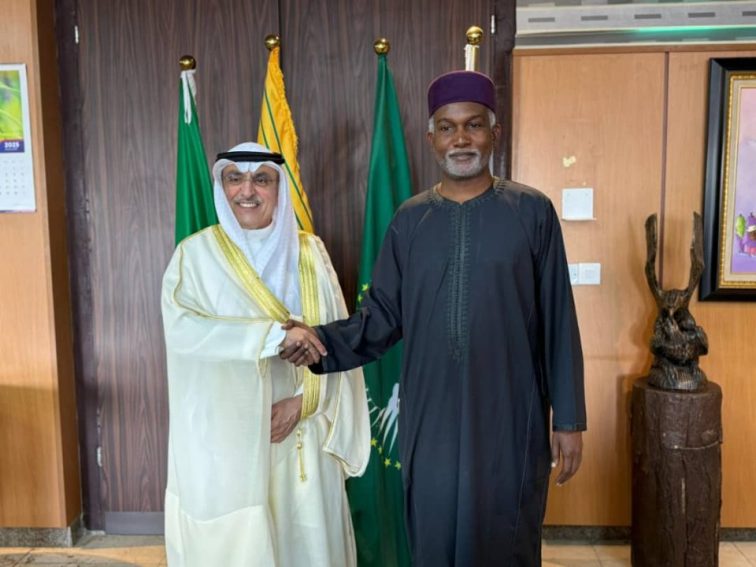
The renewed push was highlighted on Tuesday in Abuja during celebrations marking Kuwait’s 65th National Day and 35th Liberation Day. The event underscored Kuwait’s development support for partner countries and its longstanding diplomatic ties with Nigeria.
Kuwait’s Ambassador to Nigeria, Salim Aimuzayen, said his country has a strong record of supporting developing nations through the Kuwait Fund for Arab Economic Development, established in 1961. He noted that the fund has financed projects in 107 countries and reaffirmed Kuwait’s commitment to global development and humanitarian assistance.
He described Nigeria–Kuwait relations as “excellent and historical,” dating back to the 1960s, and cited the Al-Sabah School in Kaduna State as an early symbol of cooperation. He also highlighted the ongoing Reaching Out-of-School Children Project in Kaduna, funded by the Kuwait Fund in partnership with UNICEF, which aims to support more than 200,000 students.
The ambassador said Kuwait’s foreign policy is guided by moderation and cooperation, adding that the country’s Vision 2035 seeks to position it as a regional financial, commercial and cultural hub.
Nigeria’s Minister of Foreign Affairs, Yusuf Maitama Tuggar, represented by Ambassador Bukar Buni Hamman, said bilateral ties are increasingly anchored in substantive economic collaboration. He disclosed that in 2025, Nigeria secured a concessional loan from the Kuwait Fund to implement the out-of-school children programme as part of a broader $62.8 million financing package.
According to him, the initiative will support the construction and rehabilitation of climate-resilient schools, strengthen teacher capacity and expand access to quality education, particularly for girls, older children and those with disabilities.
Hamman said discussions between both countries have also explored partnerships in food security, agricultural modernisation, infrastructure, renewable energy and digital connectivity. He added that efforts are underway to enhance labour mobility and skills development, while Nigeria continues to promote an investment-friendly environment under President Bola Tinubu’s administration.
Both sides expressed confidence that the partnership would continue to grow in pursuit of shared prosperity, stability and development.