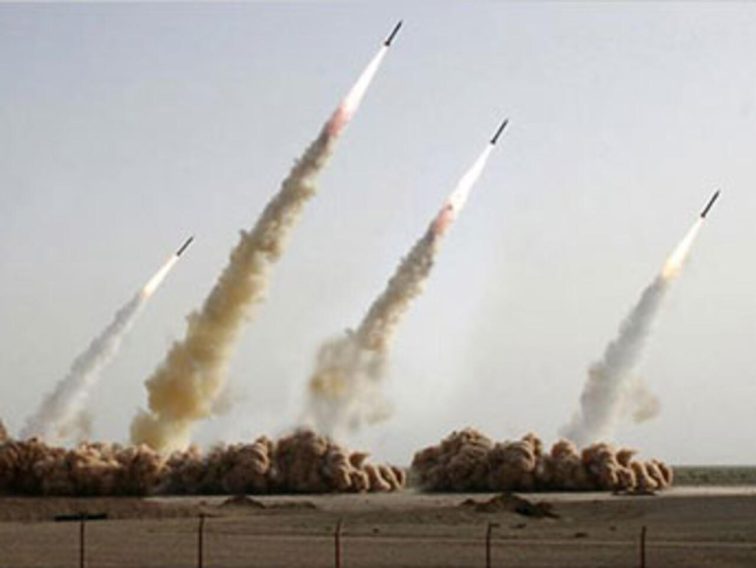
Iran launched a massive retaliatory assault across the Middle East within hours of reports that its Supreme Leader, Ayatollah Ali Khamenei, had been killed in large-scale military strikes attributed to the United States and Israel.
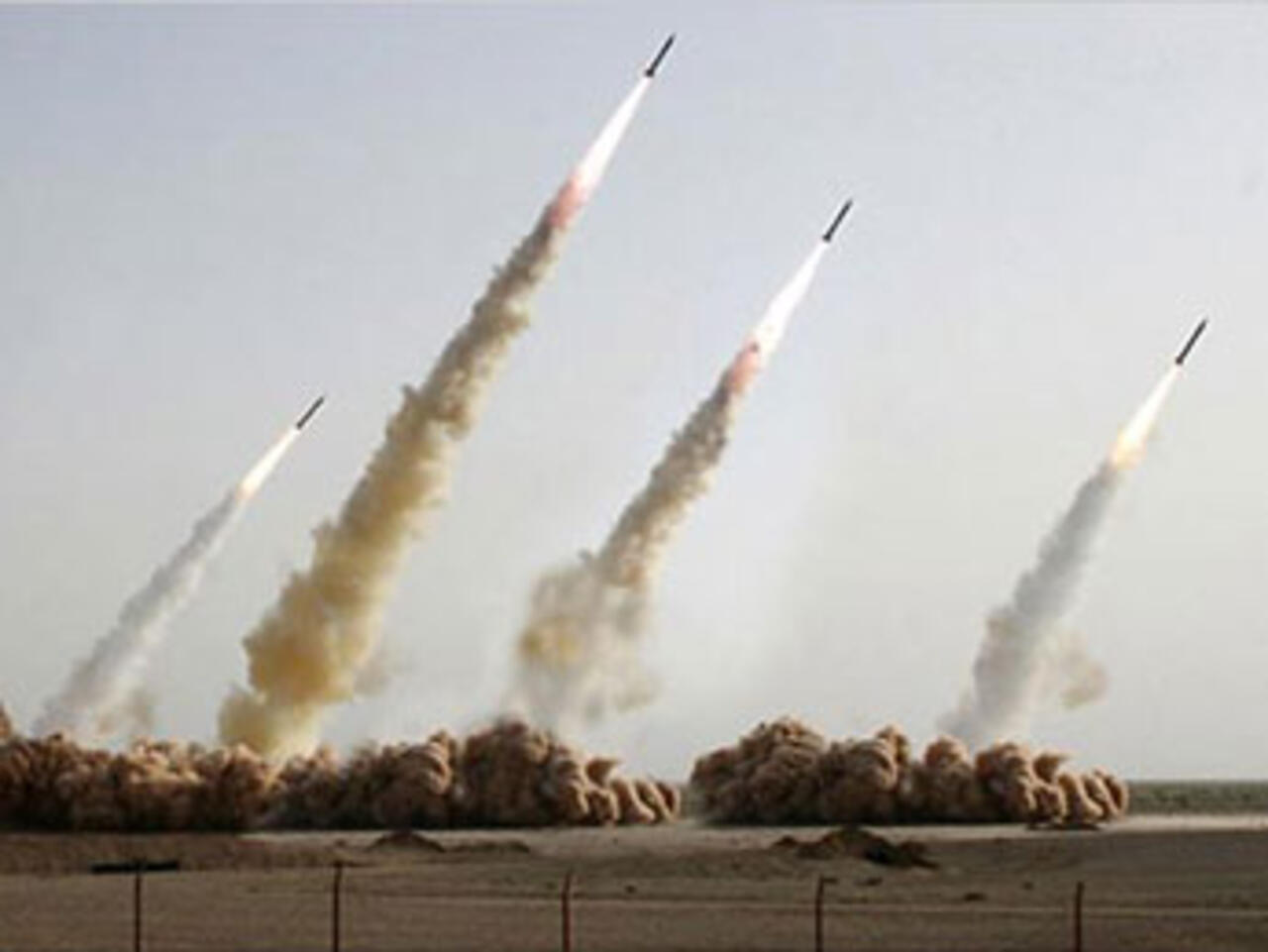
State media reported that ballistic missiles and armed drones targeted U.S. military installations across the region, claiming 27 bases were struck. Israeli sites were also hit, including military headquarters and a defence industries complex in Tel Aviv.
Air raid sirens sounded as air defence systems were activated to intercept incoming projectiles, creating widespread alarm across multiple countries.
The assault followed Iranian state television’s announcement that Khamenei, 86, had been killed during coordinated strikes on strategic sites in and around Tehran.
Tehran declared a national mourning period, describing his death as a “martyrdom” and promising a strong response to those responsible.
U.S. and Israeli officials confirmed that Khamenei was killed in the operation, framing the strikes as part of a broader campaign to degrade Iran’s military and nuclear capabilities.
U.S. President Donald Trump said the strikes were intended to “neutralise imminent threats,” while Israeli leaders called it a decisive blow to Iran’s leadership structure.
Independent verification of Khamenei’s death remains limited amid the fast-moving developments, though international news agencies are reporting statements from Iranian, U.S., and Israeli officials. Access to on-the-ground confirmation inside Iran remains constrained.
The strikes and counterstrikes represent one of the most serious direct confrontations between Iran and its adversaries in decades, raising fears of a broader regional conflict.
Governments across Europe and Asia called for immediate de-escalation, warning that continued military exchanges could destabilise the Middle East and disrupt global energy supplies.
Khamenei, who assumed power in 1989 following the death of Ayatollah Ruhollah Khomeini, held ultimate authority over Iran’s political, military, and religious institutions.
His reported death creates a significant power vacuum at the apex of the Islamic Republic’s system, where the Supreme Leader oversees the armed forces, judiciary, and key state bodies, including the Islamic Revolutionary Guard Corps.
Attention is now focused on both the trajectory of Iran’s retaliation and the question of succession in Tehran, as analysts warn that uncertainty at the top of the Iranian state, combined with ongoing military exchanges, could intensify instability across the region.
This is a developing story, and further details are expected as official statements and independent reporting continue to emerge.