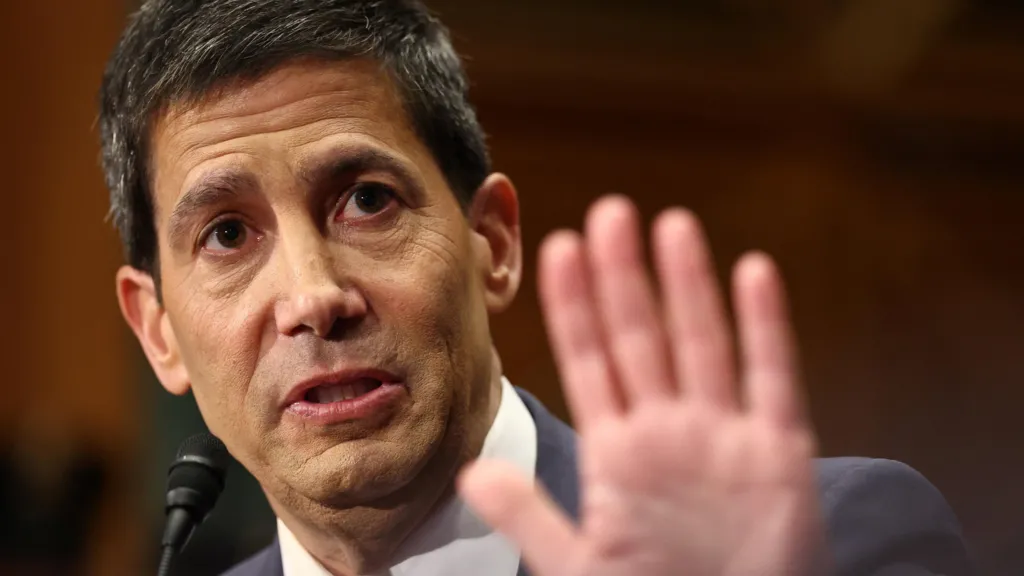
Kevin Warsh faced sharp questioning from Democratic senators during a contentious confirmation hearing over his nomination to chair the Federal Reserve, as lawmakers raised concerns about the bank’s independence, his financial ties, and his policy agenda.
At Tuesday’s hearing before the U.S. Senate Banking Committee, Elizabeth Warren warned that Warsh could become a “sock puppet” for Donald Trump, who has publicly called for lower interest rates to stimulate the economy. Warsh rejected the claim, saying the independence of the central bank was “essential” and that he would preserve its autonomy.
Warsh also denied agreeing to any arrangement with Trump on interest-rate decisions in exchange for the nomination. “The president never once asked me to commit to any particular interest rate decision,” he told lawmakers.
During the hearing, Warren questioned Warsh about his financial disclosures, including a large investment fund whose underlying assets were not publicly detailed. She asked whether the fund had links to companies affiliated with Trump, Chinese-controlled firms, or entities associated with Jeffrey Epstein. Warsh said he would divest his holdings if confirmed.
Senators also referenced reports that Trump had previously urged Warsh to support lower borrowing costs, including a meeting cited by The Wall Street Journal. Trump later said he would be disappointed if Warsh did not move quickly to cut rates, underscoring concerns about political pressure on the central bank.
While partisan divisions largely shaped reactions to the nomination, Thom Tillis, a Republican from North Carolina, withheld his support pending the withdrawal of a probe into outgoing Fed chair Jerome Powell over renovation cost overruns at the Federal Reserve’s headquarters. Tillis described the expenses as “unfortunate” but legitimate.
Powell has said he intends to remain in office beyond the scheduled end of his term on May 15 if Warsh is not confirmed, raising the possibility of a delay in the leadership transition.
In his opening remarks, Warsh outlined plans to reform how the Federal Reserve communicates policy and measures inflation. He criticised the bank’s use of “forward guidance” on interest-rate expectations and proposed developing a new inflation framework instead of relying primarily on the Personal Consumption Expenditures index.
Responding to questions about earlier comments calling for “regime change” at the Fed, Warsh clarified that he was referring to policy direction rather than personnel changes at the central bank.