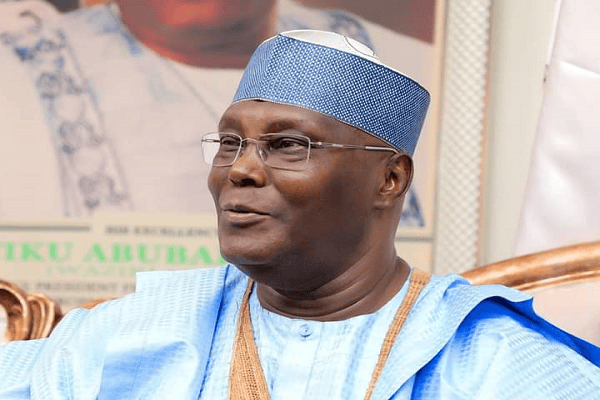
Former Vice President and African Democratic Congress (ADC) presidential candidate, Atiku Abubakar, has clarified that his proposed petroleum intervention is intended to reduce the cost of living and support domestic production, not restore Nigeria’s former fuel import subsidy regime.
The clarification followed comments by a member of Atiku’s media team, Paul Ibe, suggesting that an Atiku administration would restore fuel subsidy before eventually removing it.
In a statement issued by Atiku’s Senior Atiku Abubakar Special Assistant on Public Communication, Phrank Shaibu, the comments were described as an “unauthorised, imprecise and materially misleading characterisation” of Atiku’s position.
Shaibu said Atiku had not proposed returning to the previous import-subsidy system or setting a fixed date for ending government intervention.
According to him, the proposal is for a targeted, capped, transparently budgeted and independently audited intervention aimed at supporting domestic refining and production while reducing costs for consumers.
He said the policy would include measurable conditions for withdrawal, rather than an arbitrary deadline.
“As domestic refining expands, supply stabilises, competition deepens, and the market becomes capable of delivering affordable prices without government support, the intervention progressively becomes unnecessary,” Shaibu said.
He added that the debate should focus on addressing rising living costs and reducing the burden of economic reforms on households.
“Tinubu transferred the shock of his reforms to Nigerian families. Atiku will reduce production and transportation costs, strengthen domestic refining, and restore purchasing power,” he said.
Shaibu maintained that Atiku’s proposal should not be viewed simply as a choice between restoring and removing fuel subsidy, but as an intervention aimed at making fuel and other essential goods more affordable.