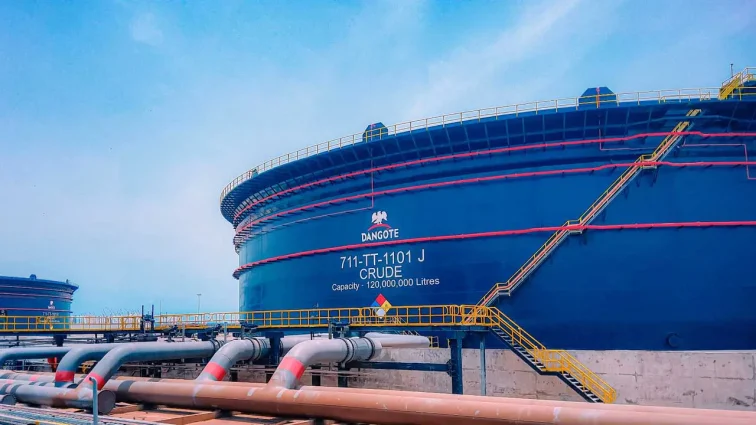
The Dangote Petroleum Refinery has emerged as a major driver of Nigeria’s growing petroleum product exports, with seaborne shipments rising sevenfold since 2023, according to the United States Energy Information Administration (EIA).
The EIA said Nigeria’s seaborne petroleum product shipments averaged 561,000 barrels per day in the second quarter of 2026, up sharply from an annual average of 79,000 bpd in 2023.
The increase followed the start of operations at the Dangote refinery in January 2024. Data from energy intelligence firm Vortexa showed that about 350,000 of the second-quarter shipments were exported, compared with an average of 46,000 in 2023.
“With increased supply of petroleum products from the country’s largest refinery, imports fell, exports increased, and Nigeria became more self-sufficient in refined petroleum products,” the EIA said.
The agency said the refinery’s impact strengthened further after maintenance and expansion work was completed in February 2026. The facility’s crude distillation capacity subsequently increased from 650,000 bpd to 700,000 bpd, supporting higher production and product availability.
Before the Dangote refinery began operations, Nigeria’s state-owned refineries collectively shipped less than 100,000 bpd of petroleum products for domestic and international markets.
Domestic distribution has also expanded. Intra-Nigerian petroleum product shipments reached 211,000 bpd in the second quarter of 2026, compared with 81,000 bpd in 2025 and 33,000 bpd in 2023.
The EIA said supply disruptions around the Strait of Hormuz also increased demand for alternative sources of refined petroleum products, further supporting Nigeria’s export growth.