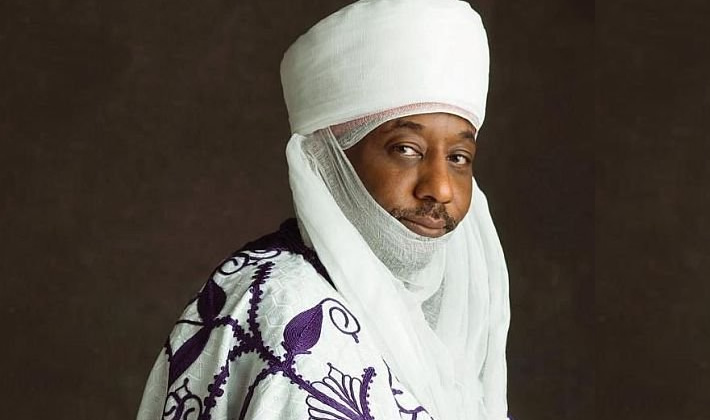
The Emir of Kano, Muhammadu Sanusi II, has criticised Nigeria’s fiscal direction, questioning the Federal Government’s continued reliance on borrowing despite the removal of petrol subsidy and exchange rate reforms.
Speaking in an interview shared by News Central TV, Sanusi said that while the removal of fuel subsidy and liberalisation of the foreign exchange market were necessary reforms, poor timing and weak fiscal discipline have limited their impact.
He argued that Nigeria’s historical reliance on importing refined petroleum products while neglecting domestic refining was a structural weakness that needed urgent correction. However, he noted that the country is now beginning to see improvements in local refining capacity and reduced dependence on imports.
According to him, Nigeria has moved from being a major importer of petroleum products to a situation where it now produces domestically and even exports refined products to parts of Europe, describing the shift as positive for the economy.
Sanusi, however, questioned whether the reforms were implemented at the right time, warning that introducing exchange rate liberalisation in a weak monetary environment contributed to the rapid depreciation of the naira.
He maintained that removing subsidies and liberalising the exchange rate were necessary steps but stressed that sequencing mattered, arguing that fiscal and monetary tightening should have preceded such reforms.
The former Central Bank of Nigeria governor also raised concerns about the government’s continued borrowing, despite the removal of fuel subsidy payments, questioning the rationale behind rising debt levels.
He referenced Nigeria’s fiscal strain, noting that at one point, a significant portion of government revenue was being used for debt servicing, leaving little fiscal space for development spending.
Sanusi further questioned the upward revision of the federal borrowing plan for 2026, which he said now stands at ₦29.20 trillion, as well as a recent request for a $516 million loan to fund the Sokoto-Badagry Superhighway project.
He argued that eliminating wasteful spending should have reduced the need for additional borrowing, asking why the government continues to accumulate debt despite policy adjustments aimed at improving revenue efficiency.
Sanusi concluded that while the reforms were necessary, Nigerians are yet to see their full benefits due to timing issues and continued fiscal expansion