Nigeria’s North-West geopolitical zone is shaping up as a decisive battleground ahead of the 2027 general elections, driven by its large voter base and long-standing political influence.
According to the Independent National Electoral Commission (INEC), the zone has over 22 million registered voters about 23.8 per cent of the national total making it the largest voting bloc in the country. Kano, Kaduna, and Katsina alone account for more than 10 million voters.
Historically, the region has produced several national leaders, including Murtala Muhammed, Shehu Shagari, Sani Abacha, Umaru Yar’Adua, and Muhammadu Buhari, reinforcing its central role in national politics.
The ruling All Progressives Congress (APC) currently controls all seven states in the region Kano, Kaduna, Katsina, Kebbi, Jigawa, Sokoto, and Zamfara giving it a strong institutional advantage. However, opposition parties are intensifying efforts to gain ground ahead of the polls.
The African Democratic Congress (ADC) is emerging as a notable challenger, attracting prominent political figures and positioning itself as a viable alternative, while the Peoples Democratic Party (PDP) seeks to rebuild its influence despite internal challenges.
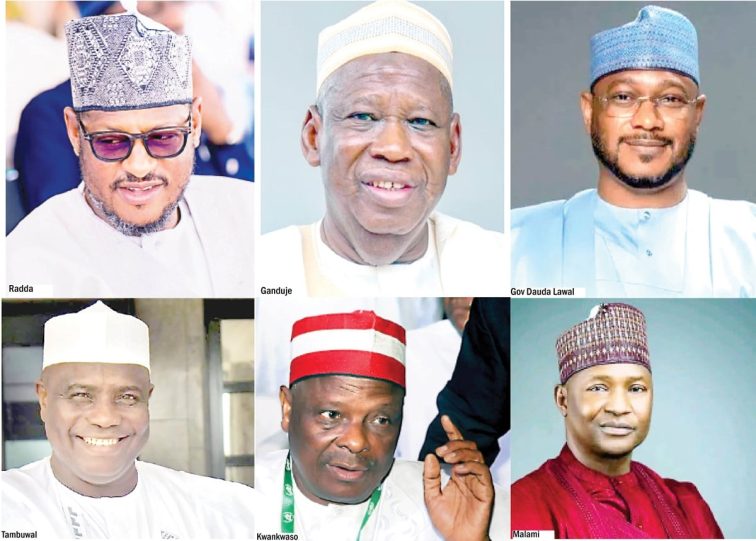
State-level dynamics suggest varied contests across the zone. In Kaduna, Governor Uba Sani appears to hold a strong position amid a fragmented opposition. In Kano, political alignments involving key figures such as Rabiu Musa Kwankwaso and Abdullahi Umar Ganduje are expected to shape the race.
Zamfara has seen shifting alliances, including defections strengthening the APC, while Sokoto remains a competitive arena defined by rivalry between Aliyu Wamakko and Aminu Waziri Tambuwal.
In Jigawa and Kebbi, incumbency and established political networks favour the APC, though opposition figures continue to test the ruling party’s dominance. Katsina also presents a competitive field, with Governor Dikko Radda seeking re-election amid growing activity from rival parties.
Analysts say while the APC holds structural advantages across the North-West, the outcome of the 2027 elections will depend on shifting alliances, party cohesion, and voter sentiment rather than numerical strength alone.